Have you ever met someone who always seemed happy, positive, and full of life, only to discover they were struggling deeply inside? The hidden sadness behind a smile is more common than many people realize. Some people become experts at hiding their pain, convincing the world that everything is fine while silently carrying emotional burdens that no one sees.
“Sometimes the brightest smile hides the darkest battle, and the loudest laughter covers the deepest pain.”
Sometimes, “I’m fine” is just another way of saying there’s a story I can’t tell. Many people use these words not because they are truly okay, but because explaining their pain feels too difficult, exhausting, or even impossible. They may fear being misunderstood, judged, or becoming a burden to others. So instead of sharing what they’re going through, they hide their struggles behind a simple response and carry the weight alone. What sounds like a casual answer can sometimes be a quiet cry for understanding.
In a society that often rewards positivity and discourages vulnerability, many people learn to smile through their pain. But behind that smile may be loneliness, anxiety, heartbreak, exhaustion, or emotional wounds that have never fully healed.
Many people spend years becoming the person everyone can rely on while quietly falling apart inside. They listen to others, offer comfort, and carry responsibilities with a smile that rarely fades. To the outside world, they seem strong and unshakable. But behind closed doors, they often battle emotions they don’t know how to express. The people who appear the happiest are sometimes the ones carrying the heaviest burdens in silence.
“Not everyone who smiles is okay; some are simply trying their best to survive the day.”
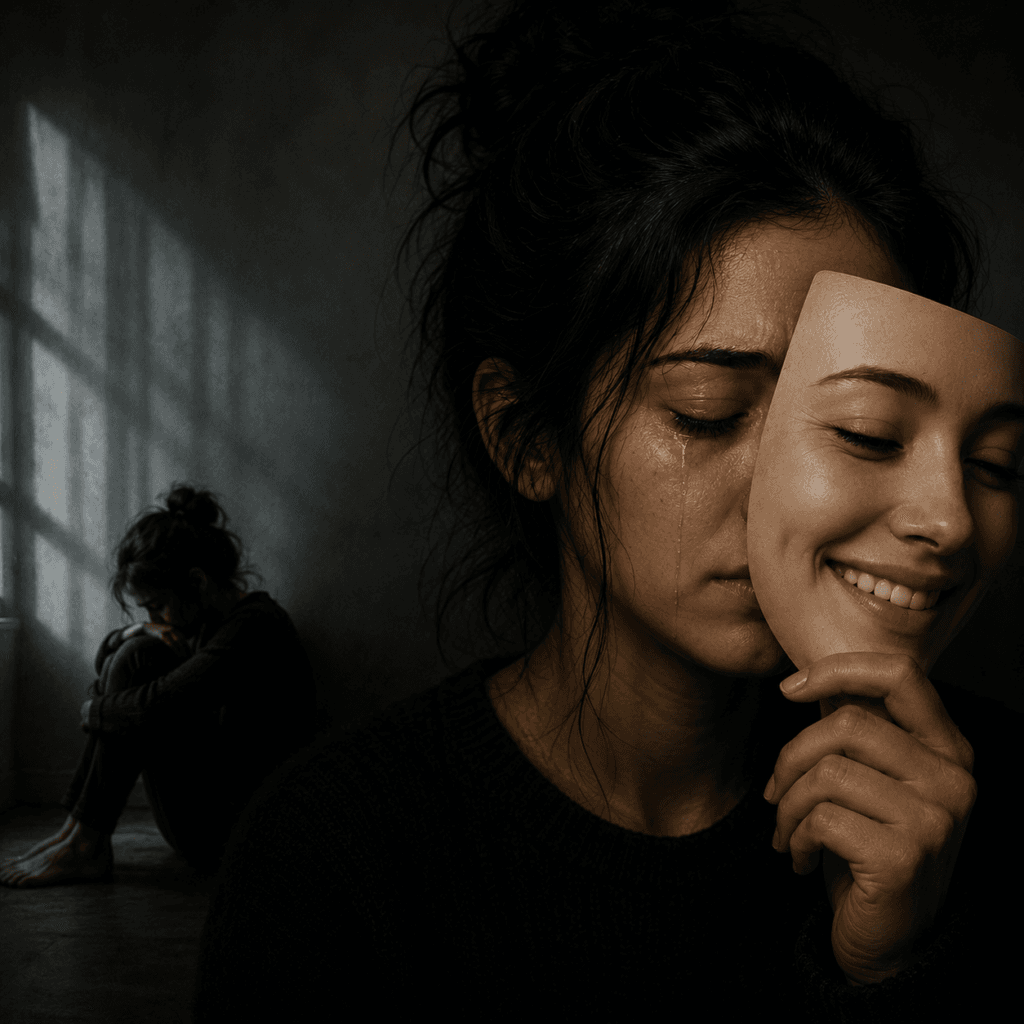
Understanding the Hidden Sadness Behind a Smile
The hidden sadness behind a smile happens when someone masks their emotional struggles with a cheerful appearance. They may laugh, socialize, go to work, and fulfill their responsibilities while privately dealing with overwhelming emotions.
Many people hide their sadness because they fear being judged, misunderstood, or becoming a burden to others. Some have spent years pretending to be okay, making it difficult even for their closest friends and family to recognize their pain.
The truth is that a smile does not always reflect someone’s emotional state. Sometimes it becomes a shield that protects them from difficult conversations and unwanted attention.
“Not every wound bleeds. Not every storm makes noise. Some people carry entire oceans behind their eyes — and still ask you how your day was.”
Have you ever smiled through a difficult day just so no one would ask if you were okay? Many people do. Sometimes it feels easier to pretend everything is fine than to explain the pain hiding beneath the surface. A smile can become a way of avoiding questions, protecting yourself from judgment, or simply finding the strength to get through the day. But carrying that weight alone can be exhausting.
“Some smiles aren’t signs of happiness—they’re signs of strength.”
Signs of Hidden Sadness Behind a Smile
Recognizing the hidden sadness behind a smile can be difficult because the person often appears perfectly fine. However, there are subtle signs that may indicate emotional distress.
Some common signs include:
Avoiding conversations about their emotions.
Becoming emotionally distant from loved ones.
Using humor to hide discomfort or pain.
Losing interest in activities they once enjoyed.
Spending more time alone than usual.
These signs do not always mean someone is struggling, but they can be indicators that a person needs support and understanding.
What Causes Hidden Sadness Behind a Smile?
There are many reasons why people hide their emotional pain.
.Fear of Judgment
Many individuals worry that expressing sadness will make them appear weak. They fear criticism, rejection, or being told to simply “get over it.”
.Childhood Experiences
People who grew up in environments where emotions were ignored or dismissed often learn to suppress their feelings. As adults, they may continue hiding their struggles because vulnerability feels unsafe.
.Social Pressure
Social media and modern culture often create pressure to appear successful and happy. This pressure can encourage people to hide their real emotions and present an ideal version of themselves.
.Desire to Protect Others
Some people keep their pain hidden because they do not want to worry their loved ones. They convince themselves that staying silent is better than asking for help.

The Psychology Behind Hidden Sadness
Psychologists often describe emotional masking as a coping mechanism—a way people protect themselves from judgment, rejection, or difficult conversations. Over time, constantly hiding emotions can become a habit, making it harder for individuals to express what they truly feel, even to those they trust. While masking pain may offer temporary comfort, it often creates a growing distance between a person’s outward appearance and their inner reality. The longer emotions remain unspoken, the heavier they can become.
“Feelings don’t disappear when ignored; they simply wait to be heard.”
The Emotional Cost of Hidden Sadness Behind a Smile
Living with the hidden sadness behind a smile can be emotionally exhausting. Constantly pretending to be okay requires energy that could otherwise be used for healing and self-care.
Over time, suppressed emotions may lead to:
Increased anxiety
Emotional burnout
Low self-esteem
Feelings of loneliness
Difficulty forming genuine connections
When people feel unable to share their true emotions, they often become isolated, even when surrounded by others who care about them.
Why We Need to Talk About Hidden Sadness Behind a Smile?
Mental and emotional struggles are often invisible. Unlike physical injuries, emotional pain cannot always be seen. This is why compassion is so important.
By talking openly about the hidden sadness behind a smile, we create space for honesty and understanding. We remind people that they do not have to suffer alone and that asking for support is not a sign of weakness.
Sometimes a simple conversation, a kind message, or genuine concern can make someone feel seen and valued.
“Invisible pain needs visible love.”
Healing the Hidden Sadness Behind a Smile
Healing begins when people allow themselves to acknowledge their emotions instead of hiding them.
Here are some steps that can help:
- Accept Your Feelings
Sadness is a normal human emotion. Allow yourself to experience it without guilt or shame.
- Talk to Someone You Trust
Sharing your feelings with a trusted friend, family member, or professional can reduce the weight of emotional pain.
- Practice Self-Compassion
Treat yourself with the same kindness you would offer someone you love. Healing takes time, and it is okay to move at your own pace.
- Focus on Genuine Connections
Meaningful relationships can provide emotional support and remind you that you are not alone.
- Seek Professional Help When Needed
If sadness becomes overwhelming or persistent, speaking with a mental health professional can be an important step toward recovery.

Gentle Reminder:
Healing doesn’t start when you smile again; it starts when you feel safe enough to stop. It is safe to put the mask down now. You are loved for who you are, not just for how happy you appear.
“You don’t have to burn yourself to keep others warm.”
Final Thoughts on Hidden Sadness Behind a Smile
The hidden sadness behind a smile reminds us that appearances can be deceiving. Some of the people who seem the strongest may be fighting battles no one knows about.
A smile can brighten a room, but it can also hide deep emotional pain. This is why kindness, empathy, and understanding matter so much. We never truly know what someone is carrying behind the scenes.
If you are struggling, remember that your feelings are valid. You do not have to keep pretending that everything is okay. Healing begins when you give yourself permission to be honest about your pain and allow others to support you on your journey.
“Your smile is a gift to the world, but your truth is a gift to yourself.”