Trauma and insomnia are more connected than many people realize. If you struggle to fall asleep, wake up during the night, or feel exhausted despite spending hours in bed, unresolved stress or past emotional wounds may be playing a role.
The relationship between trauma and insomnia goes beyond simple sleep habits. When the nervous system remains stuck in survival mode, the body can have difficulty recognizing when it is safe enough to rest, making deep and restorative sleep harder to achieve. When we hear the word trauma, we imagine something huge — an accident, a tragedy, a disaster.
But trauma is often much quieter than that. And far closer to home.
Trauma can live in:
- The childhood where love came with conditions.
- The relationship where you walked on eggshells.
- The grief you buried because “life had to go on.”
- The years of stress you proudly told everyone you were “handling.”
Trauma isn’t always what happened TO you. Sometimes it’s everything that didn’t get to happen FOR you — the comfort, the safety, the space to feel.
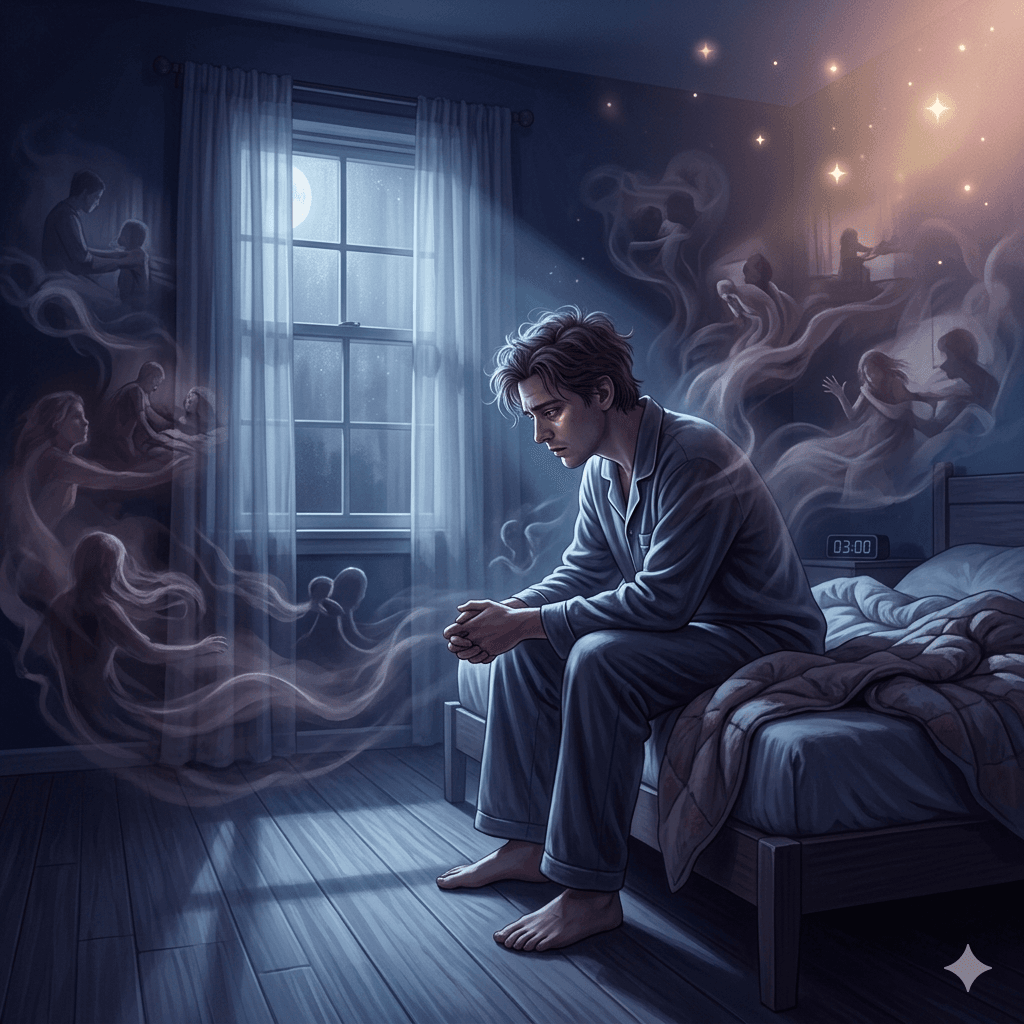
Science suggests that difficult experiences can leave lasting effects on the nervous system. When stress remains unresolved, the brain’s alarm center — the amygdala — can become more sensitive, making it harder for the body to recognize when it is truly safe. Even when the danger is gone, the nervous system may continue acting as if it needs to stay alert.
And guess what suffers first?
Sleep.
For many people, an overactive nervous system, unresolved stress, or past emotional wounds can make deep rest feel frustratingly out of reach.
“You don’t lie awake because you can’t rest. You lie awake because your heart is still keeping watch over wounds that were never given permission to heal.”
Signs That Trauma and Insomnia May Be Connected
Priya, 32, couldn’t understand why she woke up every night at almost the exact same time.
She tried herbal teas. Sleep podcasts. New pillows. Less caffeine.
Nothing worked.
Eventually, she realized the problem wasn’t happening at 3 AM. It had started years earlier.
A difficult childhood taught her to stay alert. A painful relationship taught her not to trust peace. During the day, work kept her distracted. But at night, when everything became quiet, the feelings she had spent years avoiding finally had room to speak.
The issue wasn’t that her body didn’t know how to sleep.
The issue was that her nervous system had forgotten how to feel safe.
And maybe, in some way, that sounds familiar to you too.
How Trauma and Insomnia Affect Daily Life
For years, I thought my problem was sleep.
I blamed my phone, my schedule, my habits—everything except the emotions I spent years avoiding.
What I eventually learned was that exhaustion wasn’t the enemy. It was a message.
My body wasn’t trying to punish me; it was trying to get my attention.
Many people experiencing trauma and insomnia spend years searching for the perfect sleep routine without realizing that their nervous system is still carrying the weight of unresolved experiences. Understanding the connection between trauma and insomnia can help people approach healing with greater self-compassion. Sometimes insomnia isn’t just about sleep. For many people, an overactive nervous system, unresolved stress, or past emotional wounds may be part of the story.
Understanding Trauma-Related Insomnia
While trauma can contribute to sleep difficulties, it’s not the only cause.
Persistent insomnia can also be linked to medical conditions, medications, anxiety disorders, depression, sleep apnea, hormonal imbalances, or lifestyle factors.
If your sleep problems continue for several weeks, worsen over time, or significantly affect your daily life, consider speaking with a healthcare professional.
Seeking help isn’t a sign that you’re failing. One of the most challenging parts of trauma and insomnia is that the body often remains alert even when the mind wants to rest. This ongoing state of hypervigilance can make falling asleep or staying asleep feel frustratingly difficult.
It’s a sign that you’re taking your well-being seriously.

Healing Trauma and Insomnia Through Nervous System Regulation
Healing trauma-related sleep struggles isn’t about forcing yourself to sleep harder.
It’s about helping your nervous system learn that the danger has passed.
Here are a few gentle practices that may help:
1. Nervous System Regulation
When your body has spent years in survival mode, relaxation can feel unfamiliar.
Simple activities like taking a slow walk, stretching, listening to calming music, spending time in nature, or practicing mindfulness can help signal safety to your nervous system. The goal isn’t to “fix” yourself—it’s to remind your body that it no longer has to stay on high alert.
2. Journaling for Trauma and Insomnia
Many people carry unspoken thoughts and emotions into the night.
Try spending five to ten minutes writing down whatever is on your mind before bed. Don’t worry about grammar or making sense. Let the page hold what your nervous system has been carrying all day.
Sometimes the thoughts that keep us awake simply want to be acknowledged.
3. Therapy for Trauma and Insomnia Recovery
Some wounds are too heavy to heal alone.
A therapist can help you process painful experiences, understand your emotional patterns, and develop healthier ways of coping. Seeking support doesn’t mean you’re weak—it means you’re giving yourself the care you may have needed long ago.
4. Breathing Exercises
When anxiety rises at night, your breathing often becomes shallow and rapid.
Try this simple exercise:
- Inhale slowly through your nose for 4 seconds.
- Hold for 4 seconds.
- Exhale gently through your mouth for 6 seconds.
- Repeat several times.
Longer exhales help activate the body’s relaxation response and can gently tell your nervous system that it is safe to rest.
5. Sleep Hygiene That Supports Healing
Good sleep habits alone may not solve trauma-related insomnia, but they can create a more supportive environment for rest.
Consider:
- Limiting screen time before bed.
- Keeping a consistent sleep schedule.
- Reducing caffeine later in the day.
- Creating a calm, comfortable sleep space.
- Using soft lighting in the evening.
Small changes may not feel dramatic, but over time they can help your body associate bedtime with safety rather than stress.
Healing doesn’t happen the night you finally fall asleep. Healing begins the moment you stop fighting your pain and start listening to what it has been trying to tell you all along.

When to Seek Professional Support
Consider reaching out to a healthcare professional or therapist if:
- Your insomnia lasts longer than 3–4 weeks.
- You regularly feel exhausted despite spending enough time in bed.
- Sleep difficulties are affecting work, school, or relationships.
- You experience frequent nightmares or panic during the night.
- Anxiety, depression, or overwhelming stress accompany your sleep problems.
- You’ve tried self-help strategies but continue to struggle.
Healing from trauma and insomnia is rarely about finding a quick fix. Instead, it often involves creating a sense of safety within the body, processing difficult emotions, and giving the nervous system time to recover. You deserve support, and you don’t have to figure everything out alone.
A Gentle Reminder Before You Sleep Tonight
If you’re lying awake again tonight, wondering what’s wrong with you, please hear this:
You are not weak because you’re tired.
You are not broken because you’re struggling.
And you are not failing because sleep doesn’t come easily.
Sometimes the mind that can’t rest is the same mind that spent years carrying more than it should have.
The same heart that learned to survive before it learned to feel safe.
So be gentle with yourself tonight.
You don’t need to heal everything before morning.
You don’t need to have all the answers.
You don’t need to earn your rest.
For now, let this be enough:
You survived what you thought would break you.
You made it this far.
And even if sleep feels distant tonight, healing is still happening in ways you cannot yet see.
One day, the night will no longer feel like a battlefield.
One day, rest will stop feeling like something you have to fight for.
And when that day comes, I hope you remember this:
You were never difficult to love. You were simply carrying pain that deserved compassion, not judgment.
A Gentle Truth to Take to Bed Tonight
Maybe the goal was never to force yourself to sleep.
Maybe the goal was to finally give your heart a place safe enough to rest.
Your body is not your enemy.
It is a loyal protector that learned its job a little too well.
So tonight, before you close your eyes, place one hand on your chest and one on your belly.
Take a slow breath.
And whisper:
“I am safe. I am here. It is over.”
Say it again.
And again.
Until something inside you—something old, tired, and tender—finally believes it.
Sweet dreams, brave soul.